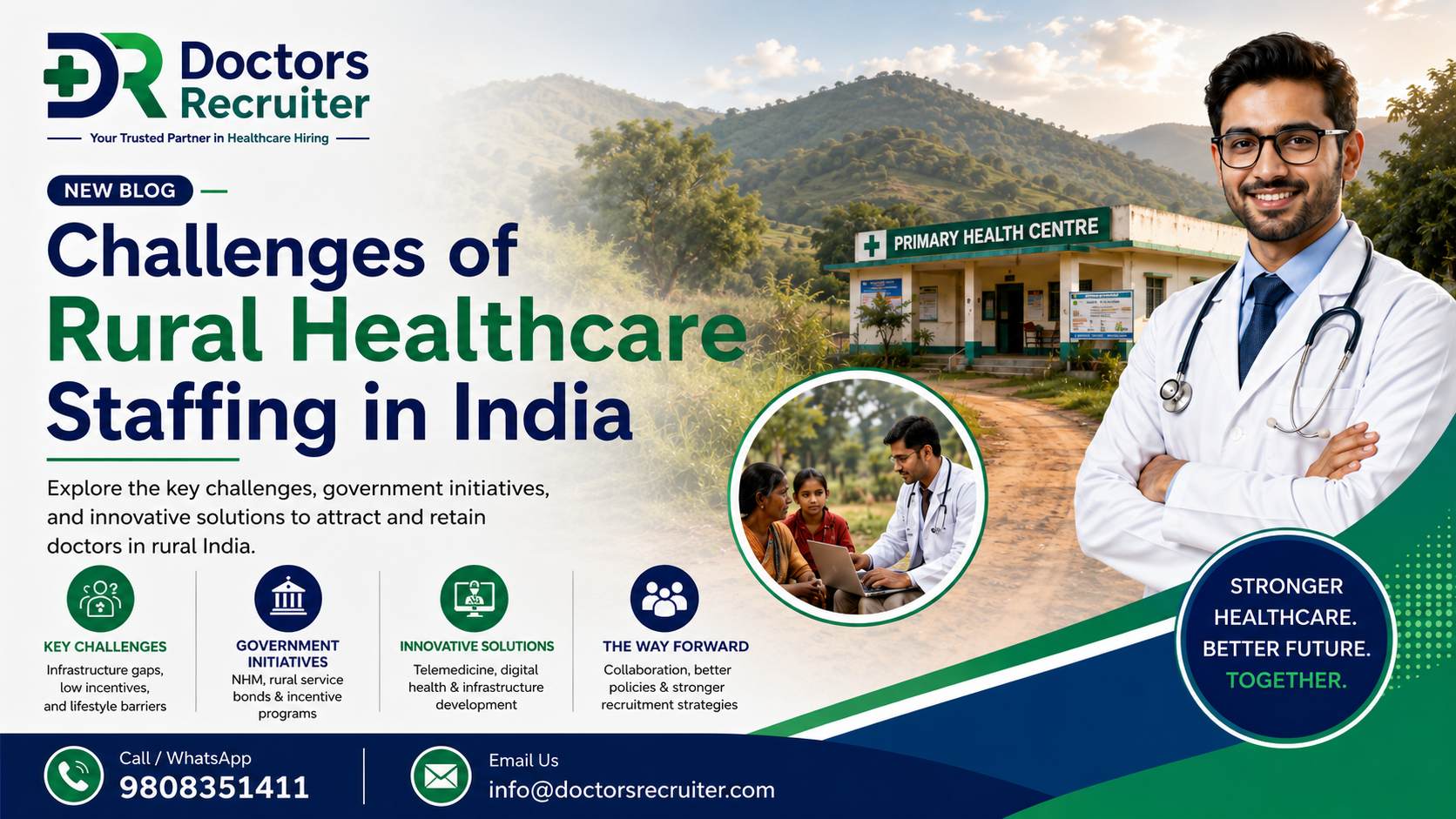
Challenges of Rural Healthcare Staffing in India
India has made remarkable progress in healthcare infrastructure over the past few decades. However, one of the most persistent challenges remains the shortage of qualified doctors and healthcare professionals in rural areas. While nearly two-thirds of India's population resides in villages and semi-rural regions, a significant proportion of healthcare resources continue to be concentrated in urban centers.
The issue of rural healthcare staffing affects patient outcomes, increases healthcare disparities, and places tremendous pressure on existing medical facilities. For government agencies, hospital chains, NGOs, and healthcare recruiters, addressing this challenge has become a national priority.
In this article, we explore the major reasons behind rural doctor shortages and discuss practical solutions that can help strengthen healthcare delivery in underserved regions.
The Reality of Rural Healthcare Staffing
Rural India faces a chronic shortage of doctors across multiple specialties, including:
- General Medicine
- Obstetrics & Gynecology
- Pediatrics
- Emergency Medicine
- Radiology
- Anesthesiology
Many Community Health Centers (CHCs) and Primary Health Centers (PHCs) operate with vacant medical positions for extended periods, affecting access to quality healthcare services.
The shortage becomes even more severe in remote districts where healthcare facilities struggle to attract and retain qualified medical professionals.
Why Doctors Avoid Rural Postings
1. Limited Healthcare Infrastructure
One of the primary reasons doctors hesitate to work in rural hospitals is inadequate infrastructure.
Common challenges include:
- Lack of advanced diagnostic equipment
- Limited ICU facilities
- Shortage of support staff
- Inadequate operation theatres
- Poor emergency care systems
Many doctors fear that insufficient resources may limit their ability to provide quality patient care.
2. Professional Growth Concerns
Young doctors often seek opportunities that enhance their clinical exposure and career development.
Urban hospitals typically offer:
- Better mentorship
- Exposure to complex cases
- Continuing medical education
- Research opportunities
- Advanced technology
As a result, many professionals perceive rural postings as less beneficial for long-term career growth.
3. Lifestyle and Family Considerations
Lifestyle factors significantly influence job decisions.
Challenges include:
- Limited schooling options for children
- Lack of employment opportunities for spouses
- Poor connectivity and transportation
- Reduced social and recreational facilities
Doctors who have spent years training in metropolitan institutions may find it difficult to relocate to remote regions.
4. Lower Financial Incentives
In some cases, rural healthcare institutions are unable to offer compensation packages that compete with urban hospitals.
While salaries may appear attractive on paper, concerns about accommodation, educational facilities, and professional development often outweigh financial benefits.
5. Workload and Burnout
Rural hospitals frequently operate with limited manpower.
As a result, doctors may need to:
- Manage OPD services
- Handle emergency cases
- Perform administrative duties
- Remain available on-call
The increased workload can lead to stress and burnout, making retention difficult.
Impact of Doctor Shortages on Rural Communities
The shortage of healthcare professionals affects millions of people.
Major consequences include:
Delayed Treatment
Patients often travel long distances to access specialist care, delaying diagnosis and treatment.
Increased Healthcare Costs
Travel and accommodation expenses add financial burden to already vulnerable populations.
Maternal and Child Health Risks
Lack of gynecologists and pediatricians can contribute to preventable complications during pregnancy and childbirth.
Overcrowding in Urban Hospitals
Patients frequently migrate to city hospitals for treatment, increasing pressure on tertiary healthcare facilities.
Government Initiatives to Improve Rural Healthcare Staffing
Recognizing these challenges, the Government of India has introduced several programs to strengthen healthcare services in underserved regions.
National Health Mission (NHM)
The National Health Mission focuses on improving healthcare accessibility and staffing in rural and remote areas.
Key objectives include:
- Strengthening PHCs and CHCs
- Recruiting healthcare professionals
- Expanding healthcare infrastructure
- Supporting maternal and child health programs
Bond Service Programs
Many states require medical graduates from government institutions to serve in rural areas for a specified period.
These bond-service initiatives help address immediate staffing shortages while exposing young doctors to rural healthcare settings.
Incentive-Based Recruitment
Several states provide:
- Additional salary incentives
- Accommodation facilities
- Hardship allowances
- Performance-based benefits
These incentives encourage doctors to accept rural postings.
The Role of Telemedicine
Technology is transforming healthcare delivery across rural India.
Remote Consultations
Telemedicine enables specialists located in cities to consult patients in rural hospitals through digital platforms.
Benefits include:
- Faster access to specialists
- Reduced patient travel
- Improved diagnosis
- Better follow-up care
Specialist Support for Rural Doctors
Doctors working in remote locations can seek guidance from senior consultants when managing complex cases.
This support improves clinical confidence and patient outcomes.
Innovative Strategies to Attract Doctors to Rural Areas
Career Advancement Opportunities
Hospitals can offer:
- Sponsored training programs
- Fellowship opportunities
- Continuing medical education support
- Leadership development programs
Career growth incentives can significantly improve retention.
Improved Accommodation and Facilities
Providing quality housing and essential amenities makes rural postings more attractive for healthcare professionals and their families.
Flexible Staffing Models
Hospitals increasingly use:
- Visiting consultants
- Rotational specialist programs
- Teleconsultation networks
- Contract-based appointments
These models help maintain service continuity even when full-time recruitment is challenging.
How Healthcare Recruiters Can Help
Recruitment agencies play an important role in addressing rural staffing shortages.
Specialized healthcare recruitment firms can:
- Identify suitable candidates quickly
- Match doctors based on location preferences
- Conduct credential verification
- Support salary negotiations
- Reduce hiring timelines
At Doctors Recruiter, we work closely with hospitals, healthcare organizations, and medical professionals to bridge staffing gaps across India, including rural and underserved regions.
Our extensive doctor network allows healthcare facilities to connect with qualified candidates efficiently and reduce vacancy periods.
The Future of Rural Healthcare Staffing
Improving healthcare access in rural India requires a collaborative approach involving:
- Government agencies
- Hospital management teams
- Medical colleges
- NGOs
- Healthcare recruiters
- Technology providers
With the right combination of incentives, infrastructure development, telemedicine, and strategic recruitment, India can significantly strengthen rural healthcare services and improve patient outcomes.
Conclusion
The challenge of rural healthcare staffing in India is complex, but it is not impossible to solve. Doctor shortages in villages and remote districts continue to impact healthcare delivery, yet innovative recruitment strategies, government initiatives, and technological advancements offer promising solutions.
Healthcare organizations that invest in attractive working conditions, professional growth opportunities, and modern recruitment practices will be better positioned to attract and retain talented medical professionals.
As healthcare demand continues to rise, strengthening rural medical staffing will remain one of the most important priorities for India's healthcare system.
About Doctors Recruiter
Doctors Recruiter specializes in healthcare recruitment and medical staffing solutions across India. We help hospitals, clinics, nursing homes, and healthcare organizations find qualified doctors quickly and efficiently.
Explore More:
- About Us:https://www.doctorsrecruiter.com/about_us
- Services:https://www.doctorsrecruiter.com/jobs
- Blog:https://www.doctorsrecruiter.com/blog
Need Doctors for Your Hospital?
Contact Doctors Recruiter today for reliable and fast healthcare staffing solutions.