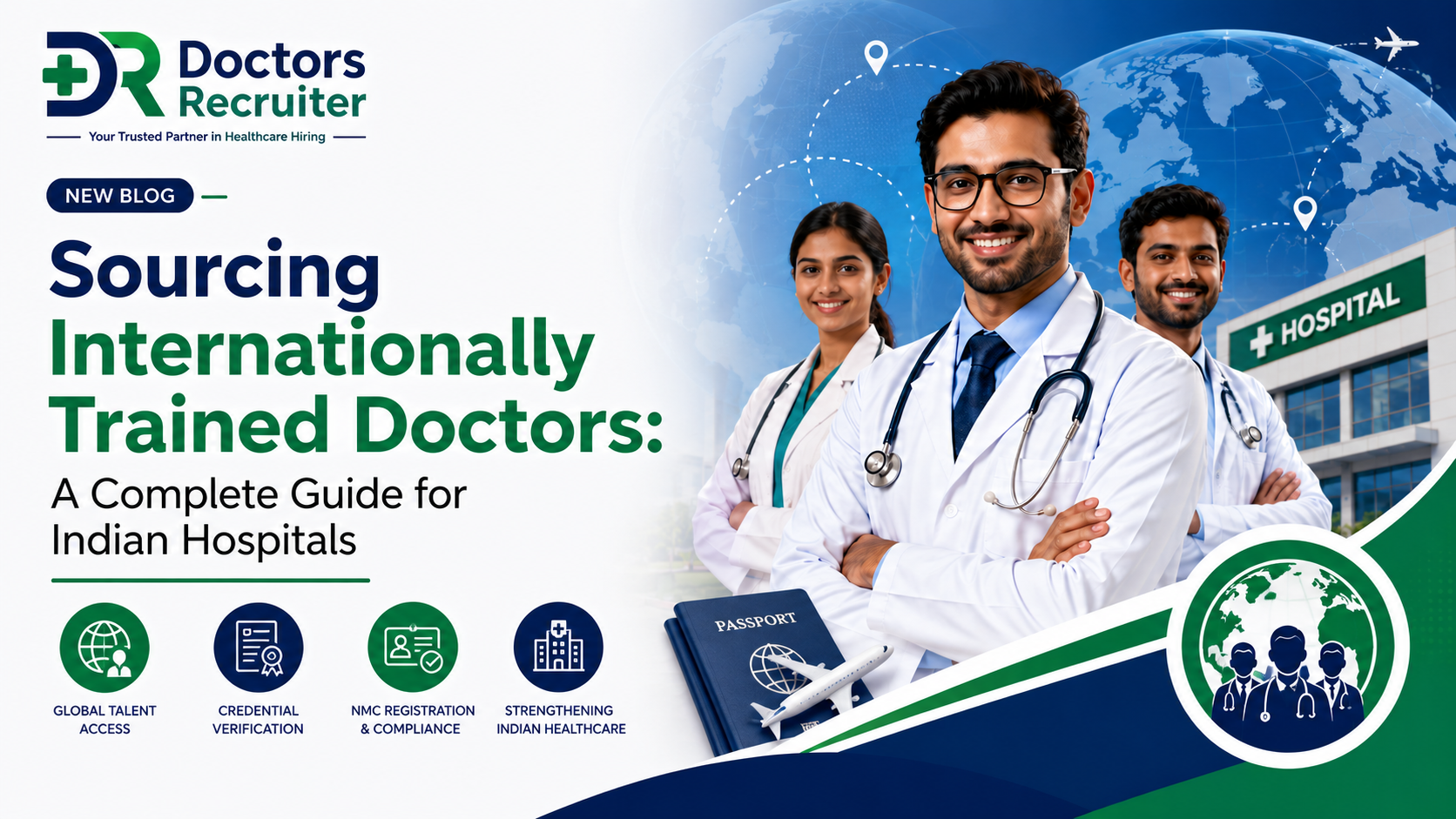
Sourcing Internationally Trained Doctors: A Complete Guide for Indian Hospitals
India's healthcare sector is experiencing rapid growth, increasing the demand for qualified doctors across specialties. While India produces a large number of medical graduates each year, many hospitals—particularly those in underserved regions and specialty departments—continue to face shortages of experienced doctors.
One practical solution is recruiting internationally trained doctors. Hiring doctors who have completed their medical education abroad can help hospitals bridge specialist shortages, improve patient care, and strengthen healthcare delivery.
However, employing overseas-trained doctors in India involves regulatory requirements, credential verification, and licensing procedures. This guide explains everything hospital HR professionals and recruitment agencies need to know.
Why Indian Hospitals Consider Hiring Foreign-Trained Doctors
Many hospitals struggle to recruit specialists in fields such as:
- Critical Care
- Emergency Medicine
- Radiology
- Anaesthesiology
- Psychiatry
- Oncology
- Super Specialties
International medical graduates (IMGs) can help hospitals:
- Fill urgent vacancies faster
- Improve specialist availability
- Support expanding healthcare services
- Reduce recruitment delays
- Enhance multidisciplinary healthcare teams
With proper verification and licensing, internationally trained doctors can become valuable contributors to India's healthcare system.
Who Are International Medical Graduates (IMGs)?
International Medical Graduates (IMGs) are doctors who have earned their primary medical qualification from a medical institution outside India.
These may include:
- Indian citizens who studied medicine abroad
- Overseas Citizens of India (OCI)
- Foreign nationals with recognized qualifications
Before practicing medicine in India, they must satisfy the regulatory requirements prescribed by the National Medical Commission (NMC).
Understanding the NMC Registration Process
The National Medical Commission (NMC) regulates medical education and professional registration in India.
Before an internationally trained doctor can legally practice in India, the following steps are generally required:
1. Qualification Verification
The medical degree should be from a recognized foreign medical institution.
Hospitals should verify:
- Educational qualifications
- Internship completion
- Professional experience
- Registration status in the country of qualification
2. Licensing Requirements
Depending on eligibility and applicable regulations, graduates may need to complete the required screening or licensing requirements prescribed by the NMC before obtaining registration.
Hospitals should always verify that the doctor holds a valid registration before appointment.
3. Registration with State Medical Council
After fulfilling NMC requirements, eligible doctors must obtain registration with the appropriate State Medical Council before independent clinical practice.
4. Hospital Credentialing
Before onboarding, hospitals should verify:
- Identity documents
- Medical registration
- Degree certificates
- Work experience
- Professional references
- Background verification
Credentialing protects both hospitals and patients.
Benefits of Hiring Overseas-Trained Doctors
Access to Global Clinical Experience
Many overseas-trained doctors have worked in advanced healthcare systems and bring valuable clinical exposure.
Filling Specialist Gaps
Hospitals located in Tier-2 and Tier-3 cities often face shortages of specialists.
Recruiting internationally trained doctors helps reduce vacancy periods.
Better Patient Care
Additional specialists improve:
- Reduced waiting time
- Faster consultations
- Improved treatment outcomes
- Expanded specialty services
Knowledge Transfer
Doctors trained abroad often introduce:
- Updated clinical practices
- International treatment protocols
- Research-oriented approaches
- Multidisciplinary teamwork
Challenges Hospitals Should Consider
Although international recruitment offers advantages, HR teams should prepare for certain challenges.
Documentation
Verifying foreign qualifications requires careful scrutiny.
Regulatory Compliance
Hospitals must ensure every doctor complies with NMC regulations before clinical practice.
Cultural Adaptation
Doctors relocating to India may require orientation regarding:
- Local healthcare systems
- Hospital protocols
- Patient communication
- Regional languages
Relocation Support
Hospitals can improve retention by assisting with:
- Accommodation
- Documentation
- Local registration
- Joining formalities
Best Practices for Recruiting Foreign Doctors
Hospitals should follow a structured recruitment strategy.
✔ Verify educational credentials
✔ Confirm NMC eligibility
✔ Check State Medical Council registration
✔ Conduct background verification
✔ Provide onboarding and orientation
✔ Offer relocation assistance
✔ Ensure compliance with Indian healthcare regulations
How Doctors Recruiter Helps Hospitals
At Doctors Recruiter, we assist hospitals with ethical and efficient doctor recruitment across India.
Our services include:
- International candidate sourcing
- Qualification screening
- Experience verification
- Candidate shortlisting
- Interview coordination
- Documentation assistance
- End-to-end recruitment support
Whether your hospital needs specialists, consultants, or super-specialists, our recruitment experts help reduce hiring time while maintaining quality standards.
Conclusion
Recruiting internationally trained doctors can be an effective strategy for hospitals facing specialist shortages. However, successful hiring requires proper credential verification, regulatory compliance, and structured onboarding.
By partnering with an experienced healthcare recruitment agency like Doctors Recruiter, hospitals can simplify the hiring process while ensuring compliance with Indian medical regulations.
As India's healthcare demand continues to grow, international recruitment will remain an important component of building a stronger medical workforce.
Frequently Asked Questions (FAQs)
Can foreign-trained doctors work in India?
Yes, provided they meet the eligibility requirements laid down by the National Medical Commission (NMC) and obtain the necessary registration.
Is NMC registration mandatory?
Yes. Doctors must comply with applicable NMC regulations and obtain valid registration before practicing medicine in India.
What documents should hospitals verify?
Hospitals should verify medical qualifications, registration certificates, identity proof, experience documents, references, and other applicable credentials.
Why should hospitals work with a healthcare recruitment agency?
A specialized recruitment agency reduces hiring time, screens candidates thoroughly, verifies documentation, and helps hospitals recruit qualified doctors efficiently.
Internal Links
- Employer Registration: https://www.doctorsrecruiter.com/employer_registration
- Contact Us:https://www.doctorsrecruiter.com/contact
- Latest Blogs: https://www.doctorsrecruiter.com/blog
Call to Action
Looking to Hire Qualified Doctors for Your Hospital?
Doctors Recruiter specializes in recruiting MBBS Doctors, Specialists, Senior Consultants, Super Specialists, and Internationally Trained Doctors across India.
📞 Call/WhatsApp: 9808351411
🌐 Website: www.doctorsrecruiter.com
Partner with Doctors Recruiter and fill your doctor vacancies faster with verified medical professionals.